
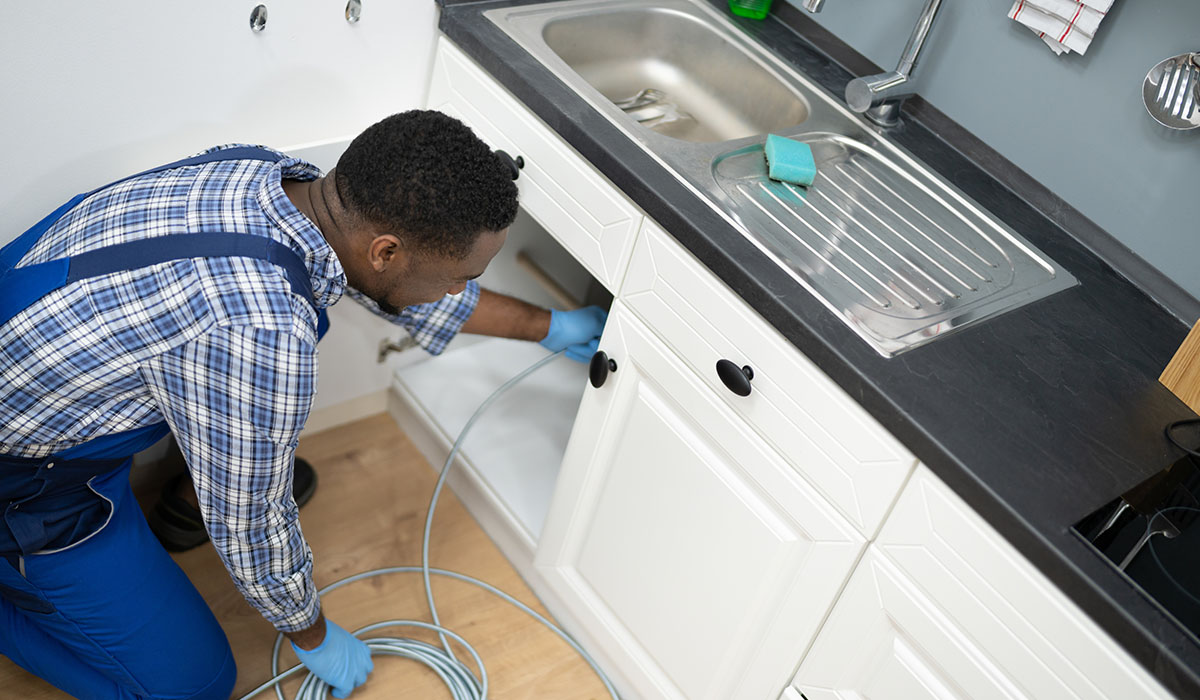
What do you do when your kitchen sink starts backing up on you? Many homeowners default to snaking the drain without giving it a second thought. Sometimes that’s the right move, but other times it might cause unnecessary damage or miss vital parts of the problem. So how can you tell which fix is right for your situation? Read our guide to find out.
Snake Your Kitchen Sink Clog If…
You Know It’s Made of Food Scraps
Kitchen sink clogs often involve food scraps that someone dumped down the drain, and food scraps are easy to cut through with a basic drain snake. Use a cup plunger for clogs that are close to the top of the pipe and consider pouring some baking soda and vinegar down the drain afterward to break up those last stubborn remnants.
You Know It’s Shallow
Drain snakes work best on clogs located near the endpoint of pipes: in other words, clogs you can see pretty well. Shallow clogs like this are easy to dislodge and clear out with a drain snake. You’ll know when you’ve successfully cleared the pipe because you’ll see it with your own eyes, and you’ll know to try again if you’re not getting the results you want.
You Have Newer PVC Plumbing, Not Clay or Metal Pipes
Most modern pipes are made of PVC plastic, an extremely durable material that’s almost impossible to damage with small tools like drain snakes. Older metal and clay pipes are a different story, though. Both materials are prone to becoming brittle over time. If your drain snake makes contact with a weakened area, it could crack the pipe open.
If you’ve got metal or clay pipes in your home, even a trained plumber won’t try to snake the drain blind. They’ll use a drain camera and their expert judgment to identify weak spots before they start trying to clear the clog. Only try to snake your drain if you know there’s a sturdy PVC pipe underneath it!
Call a Plumber If…
The Cause Isn’t Obvious
If your clog wasn’t caused by something obvious like food scraps or a lost toy, grease or soap scum build-up is likely to blame. That’s a problem, because these blockages are sticky and are harder to fully dislodge than your average toilet clog. Even if you think you’ve cleared out all the sticky residue, you might have left just enough to kick-start next month’s clogging.
Calling a plumber takes care of that problem for you. Plumbers can identify the source of the blockage and make sure any remaining residue gets scraped off before they leave. You’ll know exactly what caused the problem and you won’t have to worry about dealing with another clog in a few weeks.
You Don’t Know What Condition Your Pipes Are In
Even PVC pipes can develop issues over time. If your pipes are older or you’ve noticed red flags like repeated sewage backups or unexplained water bill increases, they may have the same sorts of weak points that clay and metal pipes often develop. That makes them unsafe to snake if you’re not a professional.
Instead of doing the snaking yourself, call your plumber and have them clear the clog and check out your pipes at the same time. You’ll get the water flowing again without causing any accidental damage and gain a better understanding of the maintenance your pipes will need going forward.
You’re Not Sure How Far Down It Goes
Sink clogs can form much further into your pipe network than you’d expect. A drain snake can still reach many of them, but the deeper the problem goes, the harder it is for a non-professional to fully clear it.
If you don’t know exactly where your clog started, it’s almost certainly deeper than you think it is. A plumber has the equipment and know-how to carve out the entire clog regardless of where it’s located.
The Bottom Line
Many kitchen sink clogs respond well to drain snaking, but a significant minority of them just can’t be tackled effectively without professional plumbing tools. If yours is one of them, our team will gladly help you take care of it. Contact Fowler Plumbing today to book a service call and we’ll get your kitchen sink back up and running in no time.