
Photo credit: CBC News
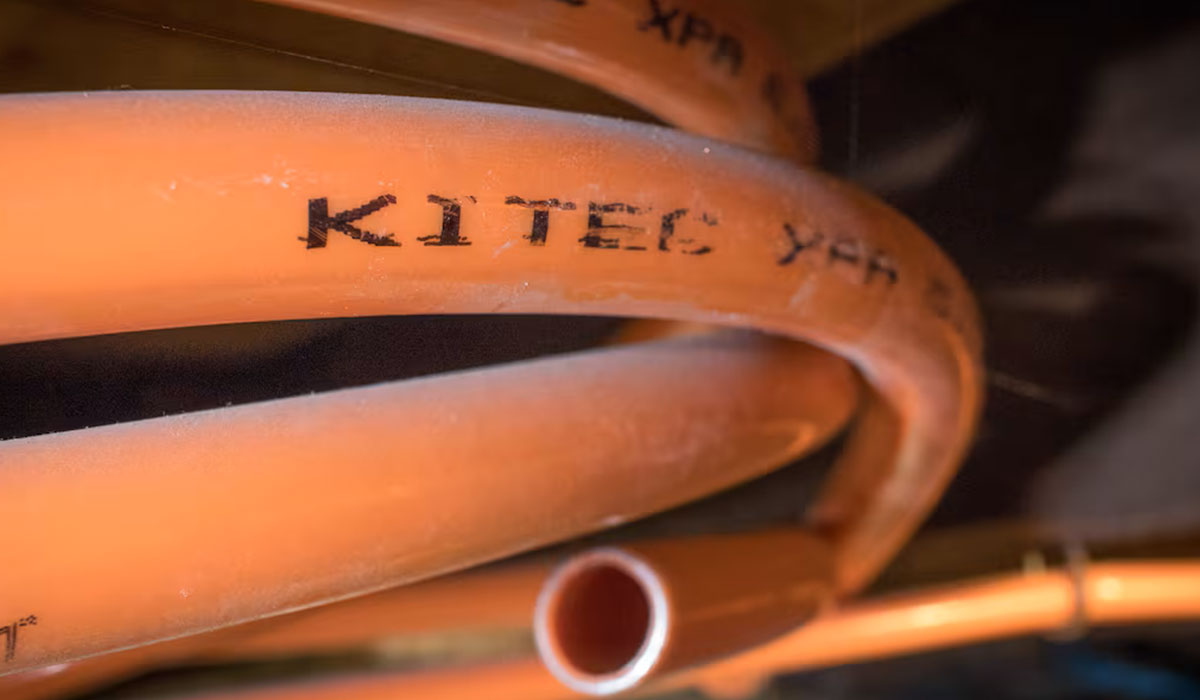
If you own a home in the Windsor area, you’ve probably heard of Kitec plumbing. These distinctive plastic pipes used to dominate new-build Canadian real estate 30 years ago.
Now, though, homeowners who find out they still have Kitec in their home often react with alarm. What’s behind this reaction, and how hard is it to get Kitec pipes replaced? We’ll answer these questions and more in today’s post.
What is Kitec Plumbing?
Kitec plumbing first hit Canadian and US markets in 1995. The system used plastic polyethylene pipes that are colour-coded based on the temperature of the water they contain: orange for hot, blue for cold. These pipes were connected to each other using brass fittings stamped with distinguishing marks like “Kitec” or “KT.”
Kitec pipes were a big deal at the time, promising to be cheaper than copper pipes and easier to install. They were also thought to be able to withstand colder temperatures than copper pipes. This made them a great fit for Canadian homes – at least in theory.
So What’s the Problem?
Kitec pipes started out with a lot of promise, but some critical design flaws kept them from living up to their potential. Just a few years after their release, they started breaking down. This was long before the end of the lifespan manufacturers had projected.
The brass fittings on these systems were prone to leaching zinc into the water, weakening them and causing excess zinc to build up around the affected areas. These fittings could also experience galvanic corrosion if they came in contact with the aluminum lining inside the plastic pipes. Both issues resulted in frequent leaks and rampant property damage.
Unfortunately, the problems don’t end there. Kitec pipes also degrade more quickly when exposed to temperatures of up to 82 Celsius. Many modern water heaters frequently exceed this temperature. This speeds up the rate of zinc buildup and leads to bigger blockages inside the pipes.
The less room there is for water to flow inside your pipes, the more the pressure there increases. Eventually, it may rise high enough to cause the pipe to burst. These failures cause catastrophic property damage and may even hurt nearby bystanders.
The Fallout
By 2005, these problems had become widespread. A wave of lawsuits and recalls were leveled against Kitec manufacturers, and the brand was removed from the market entirely by 2007.
The Real Estate Council of Ontario now advises sellers to disclose the presence of Kitec pipes in their home. Many homes have had them replaced with traditional copper or PVC plumbing. Homes that still have Kitec pipes may need to be listed at a discount to attract buyers.
Replacing Kitec Pipes
We won’t lie to you: replacing Kitec plumbing is neither easy nor cheap. We often need to cut through parts of your walls and floors to access the pipes, and you’ll need to pay for both parts and labor to install a new system.
This isn’t just a renovation project, though. It’s a long-term investment that protects your most valuable asset – your home.
Even if your Kitec pipes have been in place for decades with no problems, they have inherent vulnerabilities that put your home at risk every single day. Getting the work done before problems emerge could save you thousands of dollars in property repairs down the line. It’ll also help you get the best price for your home if you decide to sell it later on.
Get Your Kitec Pipes Replaced By Top Plumbers in Windsor
Ready to get your Kitec pipes replaced? It’s time to give Fowler Plumbing a call. Contact us today to book an in-home visit. We’ll check out your pipes and prepare a no-obligation quote to help you fit this important home update into your budget.